

CONTENT LIBRARY
Welcome to my content library. If you’re looking for blog articles, published videos, or podcast episodes, you can find them all here.
Topic

Power, Shadow, and the 16 Personality Types
When people feel powerless inside, they seek power outside—through control, dominance, status, or influence. This is why the hunger for power so often signals an unintegrated wound. What looks like confidence is frequently compensation.
True power comes from inner authority, not force. It’s the quiet strength of someone who doesn’t need to dominate, persuade, or prove anything. When the shadow is denied, power becomes abusive. When it’s integrated, power becomes grounded authority.
Every personality type has a natural relationship with power—and a predictable way it distorts when ego, trauma, or unconsciousness takes over. Some types withdraw and moralize. Others control, manipulate, or perform. But the pattern is the same: power leaks when parts of the self are exiled.
The work is not to become powerful.
The work is to become whole.When fragmented parts are welcomed home with structure, restraint, and compassion, power returns—not as domination, but as coherence. And coherence reorganizes the world without force.

Why You Feel So Powerless
Power isn’t something you acquire — it’s something you stop leaking.
Most people don’t lose their power in dramatic ways. They bleed it out slowly through oversharing, over-explaining, guilt, hypervigilance, and muddy relationships that were never meant to hold that much access.
Containment isn’t repression. It’s the ability to feel without reacting, to move from self-possession instead of impulse, and to prioritize your own nervous system over other people’s comfort. When you stop bleeding energy into places that can’t hold it, power returns naturally.
This year isn’t about healing harder.
It’s about riding forward — with fewer words, clearer boundaries, and energy that stays where it belongs.

Tools to Help You Remember Who You Are
You’re not one thing—you’re many. Body, mind, spirit. Shadow and soul. In this post, I unpack a range of tools to help you remember who you are—not who the world told you to be. From Carl Jung’s psyche model to archetypes, astrology, Human Design, and more, this is a field guide for seekers reclaiming their inner truth. Use what resonates. Leave what doesn’t. This isn’t about becoming someone new—it’s about coming home to yourself.
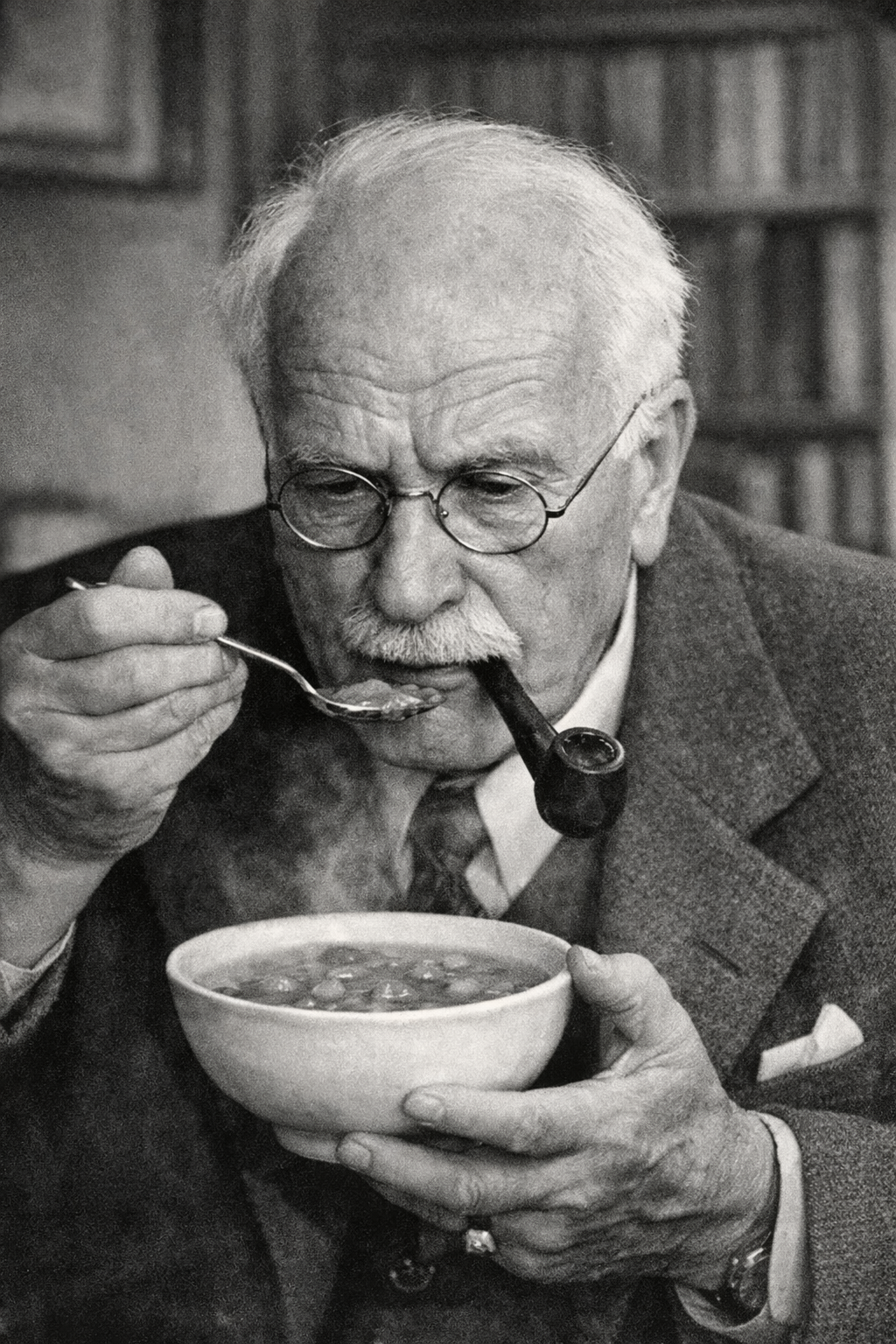
The Soup Test: What Personality Types Reveal Under Vulnerability
This isn’t about personality types.
It’s about what people do when you’re vulnerable.When you’re sick, depleted, overwhelmed, or not performing—how someone responds tells you more than charm, compatibility, or theory ever will.
Some people bring care.
Some bring control.
Some bring analysis.
Some bring excuses.
Some disappear.Carl Jung gave us language for patterns, but behavior under stress reveals the truth faster than any framework.
Soup is optional.
Attunement is not.
How Childhood Shapes the Self
Our personalities don’t emerge in a vacuum—they’re shaped by the developmental stages we navigate and the roles we unconsciously absorb in childhood. Whether you were the overachieving oldest, the overlooked middle, or the charming youngest, chances are your sense of self was built in reaction to your environment. This post explores how childhood development and birth order shape the false personas we adopt—and how reflection can help us return to the self we were always meant to be.

How Empaths Find Their Strengths
Most of us have spent years trying to be who the world told us we should be—masking our true instincts, strengths, and ways of thinking. The Myers-Briggs system doesn’t define you; it gives you language for what’s already true. In this post, we’ll unpack how MBTI can help you recognize your innate gifts, normalize your wiring, and reclaim your sense of direction—especially if you’ve felt unseen or misunderstood. It’s not about putting yourself in a box; it’s about understanding the shape of your mind so you can finally stop contorting it to fit someone else’s mold.

INFJs and Empaths Decoded
What if the very things that make you feel out of place—your depth, your sensitivity, your intuition—are actually your greatest gifts?
This post is a reclamation. A remembering.
Of what it means to be an empath in a world built for the opposite.
If you’ve ever felt invisible, doubted, or too much…
Read this. Let it remind you: you’re not broken. You’re wired for magic.

How To Remember Who You Are
Many of us are living as the version of ourselves that once kept us safe—not the version that’s true. In this post, I explore how false personas are formed, especially in families with emotionally immature parents, and how to begin the journey back to your core self. This isn’t about reinventing who you are—it’s about remembering who you were before you were told who to be.