

The Cost of Access
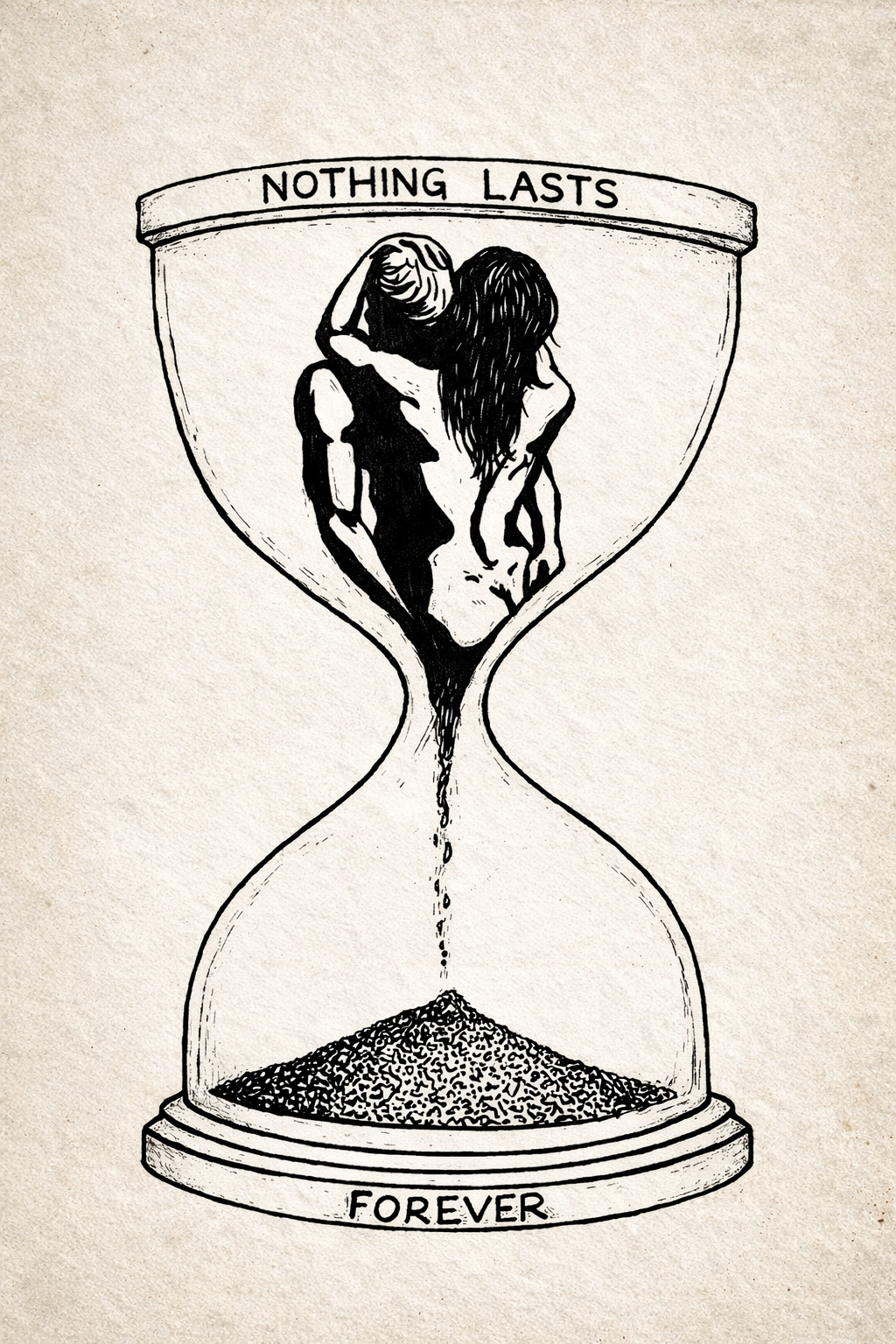
Why some men sabotage the love they claim to want—and why more women are choosing not to pay the price
It is one of the most painful paradoxes in modern dating: a man says he wants a meaningful partnership, finally meets a woman capable of offering it, and then systematically destroys the relationship.
He pulls away. He picks fights. He goes cold. He rewrites the narrative so that the intimacy he claimed to want becomes a “demand” he can no longer meet. To the woman left behind, it feels like the collapse of a future that had only just begun to feel real.
These are not always isolated accidents. For many men, deep love is not experienced as relief. It is experienced as threat.
The Ego as a Fortress
A healthy partnership requires a move from “I” to “We.” It requires being known, influenced, and vulnerable. For a man who has built his identity around control and the performance of masculinity, that shift does not feel like connection. It feels like annihilation.
Many men are socialized to understand relationships through hierarchy. In that framework, equality is not a goal but a status threat. When a woman offers a deep, mutual partnership, she is asking for a shared life in which power is reciprocal. To a man who has not done the internal work, her autonomy and insight feel like a threat to his position.
The problem is not merely difference in preference, but difference in architecture. A hierarchical person experiences love through position, control, and asymmetry. A mutual person experiences love through reciprocity, shared influence, and recognition. Those are not cosmetic differences. They are incompatible designs. One treats closeness as a threat to manage; the other treats closeness as the place where safety is built.
He is often not looking to build a life with her so much as insert her into the life he has already decided to live. His schedule, habits, friendships, comforts, and assumptions remain the fixed points; the relationship is expected to form around them. But partnership is not plug-and-play. It is not one person’s life with another fitted into the margins. It is the creation of something new that neither person could make alone.
So he sabotages the relationship to regain control, choosing the familiar pain of loneliness over the unfamiliar demands of real mutuality.
Part of the problem is idealization itself. The moment he turns her into a “dream woman” instead of a human being, the relationship becomes unstable. He is no longer relating to a person; he is relating to an image that raises the stakes and cannot survive reality. The more perfect she seems, the more unbearable it becomes to be imperfect in front of her.
For some men, even receiving love feels destabilizing. To be loved deeply is to be affected deeply, and if he experiences dependence as weakness or care as debt, he may destroy the relationship simply to regain the feeling of control.
That is the tragedy: a man can become highly practiced at performing masculinity while remaining profoundly inadequate for partnership.
The Life-Altering Stakes of the “Placeholder”
We often understate what women are actually risking in these dynamics. When a woman commits to a man, she is not offering something symbolic. She is offering time, trust, emotional labor, and a portion of her life she will never get back.
When a man treats that investment as disposable, treating a deeply invested woman as a “placeholder” while he “figures himself out,” the damage is more than emotional. It is a theft of her life’s trajectory. He siphons her stability and wisdom to prop up his own ego, then often monkey-branches into a new relationship to escape his own history. Often, he is not moving on so much as moving away from himself.
He uses one woman to develop capacities he refused to practice with her, then brings that borrowed maturity to someone else.
In that sense, the good woman is often treated not as a partner but as collateral damage in his learning arc. She becomes the training ground, the beta test, the private cost of a version of him another woman may later mistake for fully formed. By the time he performs that borrowed maturity elsewhere, she is left with the wreckage and the knowledge that she cannot go back without abandoning the self-respect that finally got her out.
From the outside, it can look like the next woman is getting the version of him you asked for. But often what follows is not growth so much as lowered stakes. He may choose someone who challenges him less, demands less, or allows him to remain less changed. That is not evidence that you were too much. It is often evidence that real intimacy required more of him than he was willing to become.
Sometimes the betrayal is made worse by ego inflation. A man who has been stabilized, encouraged, and socially elevated by a strong partner may suddenly attract more outside attention, and instead of seeing that attention clearly, he reads it as proof that he was the prize all along. Weak boundaries do the rest. He throws away the woman who helped build his life for attention that is often less about who he is than about the version of him she made possible.
For some men, the good woman is not a partner to be cherished but a summit to be reached. The chase flatters his ego; having her bores him. What he wanted was not the shared life that begins after commitment, but the status of having been chosen by someone with standards. Once she becomes real — with needs, limits, and a full interior life — he resents her for interrupting the fantasy of conquest.
The Maternal Trap
As the sabotage begins, the woman is often pushed into a performer role. She explains, nurtures, anticipates, and tries to out-love his dysfunction, hoping that if she makes the environment safe enough, he will stop running.
But this creates a devastating loop. You cannot be someone’s romantic partner and their emotional parent at the same time. She becomes an emotional shock absorber for his stagnation while he remains a child in an adult’s suit.
Part of what makes this labor so easy to exploit is that much of it does not look like labor at all. He experiences her remembering, planning, smoothing, anticipating, and emotionally tracking the relationship as if it were her natural state rather than active work. Once her effort is treated as a default setting, he stops experiencing it as a gift and starts experiencing it as background.
Much of what she contributes is preventative. She resolves tension before it becomes rupture, notices needs before they become emergencies, and carries enough emotional and logistical weight to keep the structure from fraying. Because the crisis never fully arrives, he assumes everything is naturally fine. He does not see that he is standing on a platform she is constantly reinforcing beneath him.
Because he notices the relationship only when it is breaking, he mistakes maintenance for ease. He thinks nothing is being asked of him until there is a visible crisis, not understanding that health is built from countless small acts of attention, restraint, memory, and care long before anything catches fire.
The “high road” she is taking is often just a road where she carries all the weight until she is too exhausted to move.
He may think the consequence is only that a task went undone. But the real consequence is relational erosion. Attraction is not a permanent condition; it is a response to environment. When he leaves the labor to her, he is asking her to be his employee during the day and his lover at night. Those roles do not coexist easily. By the time he notices that she has gone cold, he is looking for a reason in the moment, failing to see the hundreds of small neglects that led there.
Part of what makes this trap so painful is that women are not usually looking for endless niceness. They are looking for steadiness, courage, and the sense that a man can hold his ground when life gets difficult. Many self-described “nice guys” do not offer that. They offer compliance, fragility, or covert resentment. What they call niceness is often a covert contract: admiration, access, or desire in exchange for performance, followed by bitterness when the return never comes.
Avoidant men, by contrast, can initially project solidity because distance is easily mistaken for strength. But distance is not protection. A man who cannot stay present, tolerate need, or face his own fear cannot actually protect anyone, including himself. He may want the status of being seen as essential, but the moment he is actually needed, he experiences the role as a threat rather than a responsibility.
Over time, this does more than exhaust her. It distorts her understanding of love. When someone does everything they can and is still punished with instability, they may begin to believe that love must be earned through overperformance. They become hypervigilant, less trusting their own judgment, and more likely to confuse effort with safety.
There is another cruelty in these dynamics: men often lose respect for the woman who keeps staying even as they continue benefiting from her staying. They treat her availability as proof that she can be stretched further, neglected longer, asked to absorb more. The irony is that if her self-respect were fully intact, she would already be out of reach. He devalues her for remaining accessible while depending on that accessibility to keep avoiding himself.
In entitled men, availability can become its own kind of penalty. Because she is still there — still forgiving, still reachable, still trying to meet him where he is — he begins to experience her not as a person choosing him, but as a low-stakes constant. He mistakes access for lesser value. The self-respect he claims to want in a woman would have taken her out of his reach long ago. He resents her for remaining while depending on her remaining to avoid the consequence of becoming better.
Why Forgiveness Is Not Repair
Women are often told that forgiveness is noble, mature, or necessary for love to survive. But in relationships built around repeated sabotage, forgiveness is often enablement with a prettier name. It asks the woman to absorb the shock, regulate the pain, and override her own nervous system so the relationship can continue without the pattern ever being broken.
There is a difference between unconditional love and unconditional tolerance. Love may remain, but a healthy relationship still requires conditions around honesty, effort, and respect. A man who asks to be “met where he is” with no intention of moving forward is not asking for partnership. He is asking for a shock absorber.
What gets rewarded in these men is not proactive integrity but reactive damage control. He does not build a safe structure; he patches the latest rupture once it begins to cost him something. But plugging a leak named Julia does nothing to stop a leak named Kate. The real problem is the leaky hull. Until the structure changes, forgiveness does not create safety. It only resets the countdown to the next breach.
That damage control is not always emotional. Sometimes it takes the form of provision on his terms: the mortgage, the trip, the expensive gesture, the visible offering he can point to as proof that he cares. But provision is not partnership when it is used to avoid transformation. A check is easier than accountability. A vacation is easier than repair. He gives in ways that preserve his self-image while leaving her actual needs untouched, then builds a private balance sheet in which his visible contributions somehow cancel the emotional bankruptcy at home.
The performance is not only for her. It is often for his audience. The visible gesture — the trip, the jewelry, the public display of provision — helps him build a social alibi. If she still speaks about the neglect, the betrayal, or the erosion underneath it, he can point to the scenery and let the court of public opinion do the rest: “Look at everything I do for her.” In that sense, the gift is not just avoidance. It is a shield.
One of the most effective ways to bypass accountability is to hide behind neutral intent. “I didn’t mean to” may explain the harm, but it does not erase it. A lack of malice does not make repeated injury benign. If her needs keep going unmet, the damage is real whether or not he prefers to see himself as a good man.
His perspective is often that he should receive credit for not being catastrophic: he did not yell, did not cheat, did not explode, so he assumes he is standing in neutral. But in a partnership, neutral is not neutral. If one person is carrying all of the forward motion, the other person’s passivity lands as drag. Happiness is built not merely on the absence of disaster, but on the steady presence of support.
This is the difference between reactionary and protective love. A protective partner does not wait for visible injury before he takes a problem seriously. He listens to words, notices patterns, and guards against preventable harm. A reactionary man waits until she is hurt enough to become undeniable, then acts as though her pain were merely a notification system. In that dynamic, her suffering becomes the price of being believed.
Reactive protection is not protection. It is damage control. A man who waits until his partner is already hurt to take her seriously is not guarding her peace; he is responding to evidence that his neglect has become undeniable. By the time he acts, the damage has already been paid for in her body, her trust, or her nervous system. Real protection is quieter than that. It notices early, listens early, and moves early. It does not make her bleed first in order to prove that the wound is real.
A serious partner acts as a mirror. She reflects a man’s consistency and integrity back to him. If he secretly feels inadequate, he will not see her love as a gift; he will see it as a performance review he is failing. Often that inadequacy is not a single wound he can point to, but a vague, longstanding shame he has organized his whole personality around outrunning. Sometimes the shame is rooted in childhood boundary-blurring, which leaves adult intimacy feeling less like love and more like a threat of being consumed.
Many of these men do not just carry emotional neglect; they reenact it, treating a partner’s feelings as inconvenient, excessive, or irrelevant in exactly the ways their own inner life was once treated.
When a woman gives honest feedback, she is usually not trying to win; she is trying to protect the connection. If she is still speaking, she is still invested.
The tragedy is that many men hear that labor not as a map back to intimacy, but as proof that they are failing, and they would rather defend their ego than repair the bond. Some men treat apology as defeat. They would rather preserve the self-image of being right than do the humbling work of repair. A relationship cannot survive on technicalities. If he is more committed to winning the argument than restoring the bond, he is not protecting the relationship. He is protecting his pride.
For some men, even negative attention still feels like proof of relevance. If she is crying, yelling, or laying out the damage, he does not hear only pain; he hears that he is still the center of her emotional world. That is why he mistakes distress for devotion and conflict for connection. He takes her outcry not as an invitation to change, but as evidence that she is still there.
And because women do not actually need men in the way previous generations often did, the cost-benefit equation has changed. Repeated forgiveness now benefits him far more than it benefits her. He gets more room to keep learning through other people’s pain. She gets the exhausting task of betraying her own perception in order to call the pattern love. At a certain point, refusal is not cruelty. It is the first honest response.
The Mirror and the Echo Chamber
A woman’s intuition is often not a nuisance but an early-warning system. If he does not trust her insight, he does not actually trust the partnership, and no amount of strength can compensate for a man who refuses to look where she is pointing.
At the root of this blindness is a deeper failure: he experiences her more as an object in his environment than as a subject with a private inner life. He sees what she does — the labor, the steadiness, the presence — but not what she feels, defers, or silently loses in the process. If she is not visibly breaking, he assumes she is fine, because he cannot imagine a reality as vivid as his own unfolding beside him.
Rather than look in that mirror, many men retreat into echo chambers, social circles that validate their avoidance. They tell each other that women are unreasonable or irrational, ignoring the common denominator: their own refusal to grow. They prioritize a bro code of shared silence over a moral code of accountability.
Because they mostly surround themselves with men who think the same way, their worldview begins to feel objective. “Every guy I know feels this way” becomes proof, in their minds, that women asking for more must be the problem. They are not searching for truth. They are searching for a consensus that lets them stay unchanged.
In those retellings, the context somehow always disappears. They tell the story of her reaction — the tears, the anger, the distance, the “coldness” — while quietly omitting the neglect, deceit, or repeated dismissal that produced it. Stripped of cause, her pain becomes easy to mock.
In that sense, the manosphere often functions like a bucket of crabs. Men do not just excuse one another’s dysfunction; they pull each other downward, because a culture of growth would raise the standard. Some know they cannot or will not compete by becoming better, so they pull other men downward and call it realism.
In its more organized form, this becomes the red-pill/manosphere worldview: a system that teaches men to treat women as adversaries, vulnerability as weakness, and manipulation as strategy. It offers the comfort of grievance in place of the work of growth. The fantasy that there are “no good women left” becomes a shelter because it is easier to blame the dating pool than to confront what a good partner would actually require of you. It is also easier to claim women are impossible to understand than to admit they have often been painfully clear, and that listening would require a level of accountability these men do not want.
Some men do not seek women out of genuine relational desire so much as strategic need. A girlfriend, a wife, or a string of female attention becomes an alibi for their image, proof of their sexuality, camouflage for their confusion, and insulation from having to tell the truth about themselves.
This is not every man. But it is common enough that many women now organize their lives around the expectation of it.
Why the “Loneliness Epidemic” Is a Market Correction
Men are sounding the alarm on a loneliness epidemic, but for many women, the silence of being alone is hard-won peace. Being alone is not the same as being lonely. It feels safer, calmer, and more coherent than building a life around someone else’s instability.
For some women, that peace eventually makes room for a healthier partner. For others, it remains a complete life on its own. In both cases, the standard shifts: a man is no longer competing with other men, but with the clarity and safety of her own solitude. Men often think in relative terms: better than the next man, less toxic than their friends, decent by comparison. Women increasingly do not. They are comparing him to the peace and autonomy of being alone.
Women have stopped finding the “Not All Men” defense persuasive. After years of being dismissed, explained away, and told their clarity “doesn’t make sense,” many have stopped entertaining excuses and started treating behavior as the only argument that matters. They have realized that a man who stays silent while his peers mistreat women is just as complicit as the saboteur. They are tired of being the check-engine light for men who wait for a crisis before they offer a bandage. At a certain point, the damage of screening starts to outweigh the promise of finding an exception. Many supposedly “good” men are still too passive, too silent, or too willing to benefit from a culture they do not challenge. Women are not wrong to conclude that the search itself has become too expensive. Men spent years telling women to choose better, only to panic when women did and discovered that better was not standing in the room.
Men in these echo chambers often fantasize about a “better” woman — more healed, more grounded, more feminine, more at peace — imagining she will be more patient, more forgiving, and more permissive. They have it backwards. A healed woman is usually less tolerant, not more. She has replaced hope for his potential with observation of his reality. And when she stops arguing, pleading, or asking for help, that silence is not always peace. It is often the sound of her exit.
When she finally leaves, many of these men retreat into a final defensive rewrite: she never loved me, she changed, she was cold, she was looking for an excuse. That story protects him from the more devastating truth: she often loved him long past the point of safety, until loving him began to require abandoning herself. What he calls fickleness is often the moment her self-respect finally outweighed her hope.
Because he thinks in isolated moments, he is often blindsided by an exit that took place in slow motion. He does not see the months or years in which she was grieving the relationship while still physically present. By the time she goes quiet, she is often already gone.
The irony of that entitlement becomes even sharper in family life. A man may imagine himself as the prize while asking a woman to absorb the greater physical risk, bodily cost, and long-term sacrifice of creating the future he wants to claim. To treat that contribution as background is not leadership. It is moral illiteracy.
By choosing solitude, women are not being bitter. They are refusing to reproduce patterns of neglect. They are allowed to say no not just to a relationship, but to a future built on avoidance, disrespect, and emotional immaturity. Refusing to have children with men who refuse to grow is not extreme. It is one of the only ways the cycle finally stops. For some women, that is the appeal of the 4B movement: no marriage, no childbirth, no dating, and no sex with men. It raises the cost of male stagnation at the collective level.
Too often, women have been taught to hand out deep access before character is proven. The result is predictable: he receives the comfort, labor, and convenience of partnership without the accountability of becoming worthy of it. They are deciding that their lives are no longer a rehab center for men who refuse to self-correct.
What many men experience as a loneliness crisis is often the first time consequence has become harder to outsource than blame. Loneliness is a gentle and gracious outcome. Men are fortunate that, for now, many women are choosing withdrawal over something harsher. They should be careful not to mistake that grace for cruelty.
A man who understands the failure around him and still does nothing is not an exception to the pattern. He is part of the system that keeps it in place. There is a difference between blindness and indifference. A man who can see the fire and still chooses silence is not safer than the men who lit it.
At this point, the pattern is so predictable it is almost embarrassing. The same ego panic, the same cowardice, the same blame, the same replacement woman, the same later loneliness — it has become less a mystery than a tired script.
Evolve or Accept the Silence
The male loneliness epidemic is not a mystery. It is the result of a standard being met with refusal.
Transformation cannot be negotiated or coaxed out of a man by a woman’s love. It requires him to sit in the vacuum of his own silence. First, he has to stop monkey-branching. He has to be alone long enough to feel what he keeps trying to outrun. As long as he keeps moving on to new women for comfort, regulation, and identity, he is not healing. He is using them to avoid the work. He is not building connection; he is reaching for anesthesia and calling it love.
Many of these men claim to want depth, purpose, and real connection, yet when those things arrive in the form of responsibility, intimacy, and shared life, they experience them as inconvenience instead of meaning. They are effectively dying of thirst and complaining that the water is too wet.
For some men, even joy feels dangerous. When things are finally going well, the vulnerability of having something precious to lose becomes unbearable, so they sabotage it. They would rather be the architect of their own misery than live with the uncertainty of real happiness.
He must stop escaping his shame through new distractions. He must do the internal work to stop organizing his life around avoidance, pride, and emotional evasion. Part of the problem is that many men were never initiated into adulthood in any meaningful sense. No one required them to confront themselves, regulate themselves, or become accountable for the effect they have on other people. So the reckoning gets deferred, sometimes for years, until a woman’s withdrawal becomes the unwilling substitute for the threshold they never crossed on their own.
That history may explain the wound, but it does not excuse the refusal. Adulthood has offered countless chances to learn, reflect, seek help, and respond to honest feedback. What makes the pattern so destructive is not just the wound, but the refusal to heal it.
And in many cases, that same withdrawal initiates the woman too: out of performance, out of pleading, and into a womanhood organized around self-respect rather than rescue.
The withdrawal of the modern woman is not a manifesto. It is a consequence. She has realized that if a man finds her love an inconvenience, he finds growth an inconvenience. She is withdrawing her labor, her hope, and her future from a dynamic that keeps asking her to pay for someone else’s refusal to grow. She is leaving him with the only thing that can actually save him: the absolute necessity of his own evolution.
What Healing Actually Gives Back
There is also a reward on the other side of this work. You cannot selectively numb emotion. When a man shuts down vulnerability to avoid shame, he also numbs joy, awe, intimacy, and peace. Learning to regulate himself does not just make him less destructive. It makes him more alive.
Real strength stops coming from women’s admiration, comparison with weaker men, or the approval of the bucket of crabs. It becomes internal. He no longer has to manufacture importance, posture for status, or chase borrowed proof that he matters. He can take pride in character instead of performance.
From that place, love stops feeling like a threat to survive. It becomes something he can finally participate in without trying to dominate it, flee from it, or break it. He is no longer just less harmful. He is more human.
Breaking the pattern requires different work on each side. The saboteur has to learn that intimacy is not an emergency and that control is not the same as safety. He also has to stop waiting to become flawless before he allows himself to be loved; the break comes when he can admit he is imperfect and still choose to stay. The performer has to learn that love is not earned through overfunctioning, and that a relationship ending is not proof of unworthiness.
Signs He Is Still Performing
If he cannot be alone, cannot take feedback, only seeks therapy under threat, stays silent around men who mistreat women, or sabotages joy when things are finally going well, he is not ready for partnership.
If he does not prioritize the relationship, keeps emotional backups, leaves commitment ambiguous, or surrounds himself with people who normalize dishonesty and disrespect, he is still performing.
If his actions do not match his words — if he breadcrumbs, future-fakes, hides behind vagueness, or keeps escape routes open through exes, orbiters, or unfinished entanglements — he is still performing.
If he is secretive with his phone, evasive about his whereabouts, defensive about ordinary transparency, or uses social life, screens, porn, or the next woman to regulate what he refuses to face in himself, he is still performing.
If he is careless about sexual health, dishonest about his history, evasive about his desires, or willing to let a woman make decisions without the truth she would need to give real consent, he is still performing.
If he stonewalls, minimizes obvious harm, treats every confrontation as something to outlast rather than answer, or asks women to absorb the cost of his self-protection, he is still performing.
He may want the appearance of masculinity, but he is still outsourcing regulation and avoiding self-confrontation. If he prioritizes comfort over character, he is not a partner. He is a visitor.
For the Men Who Actually Want to Change
The first step is not finding the right woman. It is becoming able to remain present when a good one appears. That usually means being alone and in therapy and/or an accountability group for at least a year, long enough for solitude to stop feeling like a temporary inconvenience and start becoming actual work.
Real change would require more than remorse or good intentions. It would require solitude, the end of monkey-branching, the loss of ego-fueling backups, serious therapy and accountability, sober confrontation with the damage he caused, and the voluntary rebuilding of character from the inside out. Not because a woman begged for it, but because he became unwilling to remain the man who caused that damage.