

The Search For Home
When my interview with Anne was recorded, I was excited to be in Canada.
At the time, I had just started seeing someone new. He treated me well. I thought we were building something grounded and monogamous. For a moment, it felt like life was opening in an exciting new direction. For a moment, it felt like everything I had left behind and lost might have been worth it. Like maybe I hadn’t made a huge mistake. Like the trade I had made to come here was giving something back.
But life has a way of teaching through contrast.
To be honest, I had been feeling done with dating before I came here. The dynamics in the United States had already left me exhausted. The ambiguity, the performative intimacy, the way people say one thing while quietly living another. I came to Canada partly wondering if things might be different here.
What I’ve learned is that the signals are just harder to read.
Real kindness and social performance can look almost identical here, at least at first. In the United States, for all its problems, you often know more quickly where you stand with people. Here it can take longer to see the underlying dynamics. The lines between sincerity and social maneuvering blur together, and sometimes you don’t realize what’s happening until you’re already inside the game.
Over time, I began to suspect that while I believed we were building a monogamous relationship, he was quietly imagining a future where he remained polyamorous. That difference in values eventually revealed itself. And when it did, the entire social landscape around me began to look different.
What I started noticing wasn’t just about one relationship. It was something cultural.
There are wonderful people here. Kind people. Thoughtful people. I’ve met several who I genuinely admire and respect, and I don’t want anything I say to erase that. But there’s also a layer of social dynamics that feels deeply unfamiliar to me.
Competition between women.
Subtle status games.
Ambiguity in relationships that feels almost normalized.
In some social spaces, I sensed something I’ve rarely encountered before: a quiet satisfaction when a woman steals attention away from another. A kind of rivalry that feels less about connection and more about hierarchy.
It puzzled me.
Because I’ve always believed relationships; romantic and otherwise, should be built on clarity, loyalty, and mutual respect.
The ambiguity feels exhausting.
And the social hierarchies feel strange in a place that prides itself on being culturally sophisticated.
The Old Rivalries
Living in Quebec, you can’t help but notice the long-standing tension between English and French identity.
The French lost a war to the British in the 1700s, and in some ways the cultural memory of that loss still echoes today. Language becomes identity. Identity becomes politics.
And politics becomes social structure.
But stepping back from it all, I sometimes find myself wondering how meaningful that rivalry actually is.
Because none of this land originally belonged to the English or the French.
This is Algonquin land.
Indigenous peoples were here long before European empires arrived and started drawing borders, assigning languages, and building national myths.
I’m Irish-American. My ancestors fought the English too. But when I step into these dynamics, I’m suddenly reduced to the language I speak.
English.
And that classification feels strangely simplistic.
For a culture that values sophistication so deeply, defining identity primarily through language feels… unsophisticated.
Human beings are far more complex than that.
What Culture Shock Really Is
What this experience has shown me is something humbling:
My values are not universal.
I grew up believing certain things were obvious:
Clarity is kindness.
Loyalty matters.
Integrity should be visible in how people behave when no one is watching.
But values that feel obvious to one person can feel negotiable to another culture.
That realization is both unsettling and clarifying.
Because it forces a deeper question:
If values aren’t universal, where do you go to find people who share yours?
The Word I Keep Thinking About
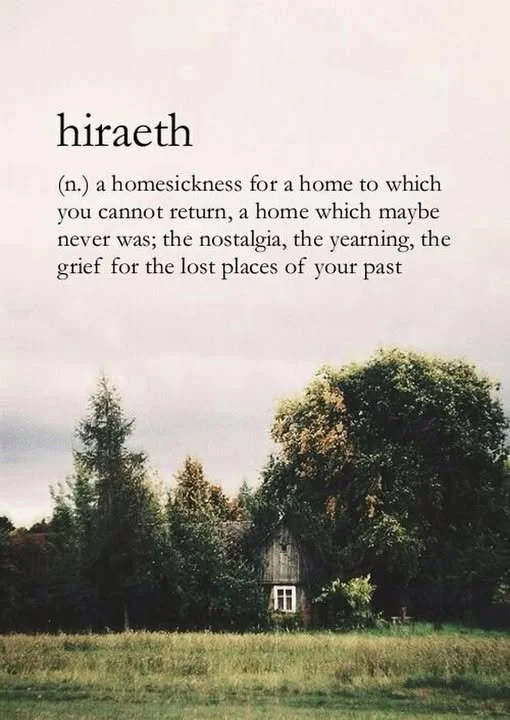
There’s a Welsh word: hiraeth.
It means a longing for home.
Not just a place you lived, but a place that feels spiritually aligned with who you are.
Sometimes it’s nostalgia.
Sometimes it’s the sense that the home you long for might not even exist anymore.
Lately I’ve been feeling that word a lot.
I know people who share my values. My friends have them. I have them.
Integrity. Loyalty. Directness. Care for others without needing to dominate them.
So the question isn’t whether those values exist.
They clearly do.
The real question is whether they exist in a place.
Or whether they exist only in pockets of people scattered around the world.
Maybe there are echoes of it in places my ancestors came from. Ireland still carries a memory of older ways of relating to land and community. Maybe there are corners of the world where people have managed to preserve something quieter and more grounded. New Zealand sometimes feels like it might hold fragments of that. In Patagonia, there’s even a pocket where Welsh is still spoken—tiny cultural islands surviving far from where they began.
Maybe places like that hold pieces of the feeling.
Or maybe they don’t.
The Search
Maybe the answer is that home isn’t something we inherit.
Maybe it’s something we build.
Or something we find by trial and error, city by city, culture by culture, until we stumble upon a place where the social fabric feels natural instead of confusing.
Or maybe you have to start from a blank slate and build something honest. Something so rooted in integrity and trust that the people who are looking for the same thing will eventually find their way there.
I don’t know where that place is yet.
But I know one thing now that I didn’t fully understand before:
The longing for it is real.
And it’s worth listening to.
Because somewhere in the world, there must be a place where integrity doesn’t feel unusual.
Where clarity in relationships is normal.
Where women don’t have to compete for dignity.
Where people don’t need ambiguity to maintain social status.
Where belonging depends on the substance of your soul, not the language that you speak.
I don’t know where home is yet. But I know, at least for now, that it isn’t here.
And maybe that’s the point.
Sometimes when you don’t quite fit into a place, you start to get the quiet feeling that the place itself would rather keep things exactly as they are. If that’s true, then perhaps the people who belong here should have the space to keep building the culture exactly the way they want it.
There are good people here. People I respect and appreciate. Nothing about this changes that.
But belonging works both ways.
And sometimes the most honest thing you can do, for yourself and for the place you’re in; is to recognize when it isn’t yours to keep.
Tant pis.